Author name: Katharina Shaik-Moest

Exercises for your naturally weakening muscles

Our body naturally starts losing muscle mass starting from age 30. If we don’t workout we lose between 3-5 % of muscle mass per decade, leading to a muscle loss of up to 40% when we turn 70. To prevent this muscle loss we can do regular exercises that are focused on our muscles. Especially resistance/strength training has shown to increase muscle mass and prevent muscle loss. In this blogpost I will share which muscles tend to weaken naturally and discuss some strengthening exercises that will help these muscles. Category of Muscles Our body is made up of over 600 muscles. In the late 1960s a Czech scientist named Dr. Vladimir Janda discovered that some of these muscles seem to be almost always active, while others seem to only get active when we make movements related to those muscles. He categorised the always active ones as postural muscles (also called tonic muscles) and the on-demand active ones as phasic muscles. Let’s look into them a bit more.  Postural or Tonic Muscles Postural muscles are active most of the time and are needed for our body to keep its posture/stay upright. They have relatively more slow-twitch muscle fibres compared to Phasic muscles. These slow-twitch fibres help a muscle endure longer periods of usage without getting fatigued. Postural muscles tend to shorten in length more easily and get tightened.  They lose muscle mass slowly compared to Phasic muscles.  Phasic Muscles  Phasic muscles are predominantly used to support movements of our body. They have relatively more fast-twitch muscle fibres compared to Postural muscles. These type of fibres can create an outburst of energy in a very short timespan, which supports the muscles during quick movements. However they get tired a lot faster compared to slow-twitch muscles, which can endure longer usage. Phasic muscles tend to weaken and increase in length when they are not used. They lose muscle mass faster compared to Postural/Tonic muscles.  Even though each muscle has both fast-twitch and slow-twitch muscle fibres, their percentage in our muscles vary depending on their function – whether the muscle is used for posture or for movements. Naturally, tonic or postural muscles tend to shorten and phasic muscles get weaker and increase in length. To prevent the shortening of postural muscles we need to stretch them regularly.  To stop phasic muscles from getting weak and losing muscle mass, we need to do strengthening exercises with these muscles.  Before getting into the exercise part I want to give an overview of major phasic/weakening muscles. List of weakening muscles Even though there are numerous phasic muscles in the body, below are the most commonly referred phasic muscles that tend to get weaker when not exercised regularly.  Muscles of the Arm Triceps Wrist & Finger Extensors Muscles of the Shoulder and Upper Back Deltoid Trapezius (middle + lower part) Rhomboids Serratus Anterior Deep Cervical Flexors Supraspinatus Infraspinatus Lower back and Abdominal muscles Thoracic Erector Spinae Rectus Abdominis Transversus Abdominus Muscles of the Thigh and Buttocks Vastus Lateralis Vastus Medialis Gluteal Muscles Muscles of the Lower leg Tibialis Anterior Peroneal / Fibularis Toe Extensors Exercises for weakening muscles I am sharing 8 exercises below that focus primarily on strengthening the weakening muscles listed above.  Before you begin these exercises, here are a few things for you to consider:  It would be highly beneficial if you do these exercises 3 times a week (on alternate days with a two day break once) If possible, try to do two rounds of all 8 exercises with a short break of 3 minutes in between the two rounds. It helps your muscles to warm-up before you begin this exercise routine. If possible, warm up by walking or running slowly for 5 minutes. If you can’t go outdoors, you can also do marching movements indoors with your hands and legs for 5 minutes. Take a 30 second break between two exercises. Exercise 1 – Squats Squats – starting position Squats – workout position Stand with your feet apart a bit wider than your hips (picture 1). Hold your arms towards the front of your chest to balance your body weight. Slowly bend your knees and lower your back towards the ground. Make sure your hips are moving backwards when your back is moving down, and try to keep your back straight (not arched) (picture 2). Make sure your knees stay behind your toes, so there is not too much pressure on your knees (picture 2). Slowly bring your back up again. Repeat the above steps 15-20 times. Breathe in while coming down and breathe out while standing up.  exercise 2 – Dips Dips – Starting position Dips – Workout position Start on the edge of a bench, chair or bed with your arms straight and holding onto the edge (picture 1). Your knees are bent at 90°and your feet are below your knees (picture 1). Slowly move your upper body downwards towards the ground (picture 2). Then use your arms to lift your body back up to the starting position. Repeat 15-20 times. Breathe in while coming down and breathe out while coming up.  Exercise 3 – Bridge Bridge – starting position Bridge – Workout position Lie down on your back with your knees bent and your feet on the floor (picture 1). Your arms are extended next to your body with palms facing down. Slowly lift your hips as far up as you can. Hold this position for 20-30 seconds. Keep breathing in and out while holding this position. Exercise 4 – Prone Front Rowing Prone Front Rowing – starting position Prone Front Rowing – front arm position Prone Front Rowing – rowing back arm position Lie down on your stomach with your arms at a 90° angle from your body with your palms facing down (picture 1). Lift up your upper body and extend your arms to the front (see picture 2). Pull your elbows backwards as far as you can with your fingers still pointing forward (picture 3). Stay up with your upper

Exercises for your naturally weakening muscles Read More »
How arms can improve your running

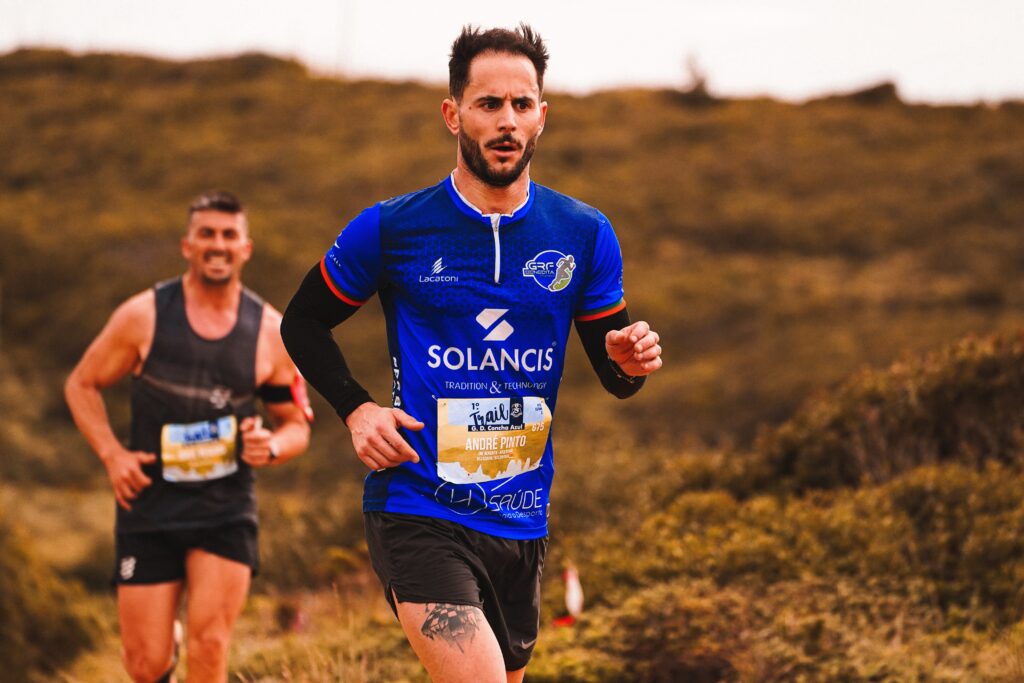
When we think about running and running techniques, we mostly think about how the legs move, how they land, how long the steps are etc. But we don’t often think about our arms. Interestingly, our leg movements are linked to our arm movements, and they collaborate with each other during running. By adjusting our arm movements we can influence how our legs move, and help create a more economic running style. In this blog post I will share some tips on how to move your arms while running, so your running becomes smooth and efficient.  Here are some tips for your arm movements, that can help you create a smooth and efficient running style: 1. With a straight upper body and stable shoulders, try to only move the arms from your shoulder joint, without rotating the shoulders. If your shoulders rotate, your legs need to balance out the rotation of your upper body by swinging to the side, which will affect your knee and hip joints on the long run. 2. Your elbows should be at about a 90° angle or a bit less and stay with that angle while moving back and forth. This angle influences your stride. Having a more open angle will create very long strides, and a closed angle will promote very short steps. To create a comfortable pace and rhythm an angle at 90° or a bit less is recommendable. 3. Your arms should move back until you can a see a triangle between your elbow and your back. This helps to counter-balance your leg movements and with that keeping your body stable. 4. When your arms move forward, your hands should stop around your chest level. This promotes a forward focused running style. If your hands go up higher, your body automatically wants to move upwards, going into a jumping direction. This will lead to you feeling exhausted a lot faster, as it needs more energy to run.  5. Make sure your arms don’t cross over into each other’s space. If they cross over, your legs need to balance that turning movement out and your legs will swing outwards, which can have a negative impact on your knees and hip joints. You can always test out all these different movements and angles for yourself to see how different movements affect your running. To practice these recommended arm movements you can always start practicing them while standing, only moving your arms back and forth. At first try it out slowly, if it goes well you can increase the speed and try it out at faster speeds, and also start trying it out while running. Always keep in mind that changing movements that we’ve done all our life might take a bit of practice and time, but it is definitely worth giving it a try.

How arms can improve your running Read More »

Grundlagen des Dehnens

Wenn wir in der Früh aufwachen, ist eine unserer ersten natürlichen Reaktionen, unsere Arme, Beine und unseren Körper zu strecken, um uns auf den Tag vorzubereiten. Es ist etwas, worüber wir normalerweise nicht bewusst nachdenken, sondern es ist eine automatische Reaktion unseres Körpers. Aber warum tun wir das? Was ist der Zweck dieser natürlichen und automatischen Bewegung?   Nach der Definition des Wörterbuchs Duden bedeutet dehnen ‘in die Länge, Breite ziehen, strecken’.  Wenn wir in der Früh aufwachen, neigt unser Körper dazu, sich angespannt anzufühlen, weil wir unsere Muskeln während des Schlafens längere Zeit nicht benutzt haben. Und wenn Muskeln nicht verwendet werden, verkürzen sie sich automatisch. Indem wir unseren Körper in der Früh strecken, dehnen wir die Muskeln also wieder aus, sodass sie einsatzbereit sind.   Aber warum entscheiden sich Leute dazu, regelmäßig zu dehnen? Und warum ist es notwendig, dass wir unseren Körper, zusätzlich zu den automatischen Dehnbewegungen in der Früh, dehnen? In diesem Artikel versuche ich, einige Einblicke in die positiven Auswirkungen auf unseren Körper durch das Dehnen zu geben, und wie dies unseren Körper & Geist beeinflussen kann. Es gibt verschiedene Möglichkeiten, wie man seine Muskeln dehnen kann, und ich werde später in diesem Artikel noch mehr darauf eingehen, aber zuerst möchte ich darüber schreiben, was in unserem Körper passiert, wenn wir dehnen. Die Universität von Southern California hat darüber geforscht und hier sind einige ihrer Ergebnisse. Auswirkungen des Dehnens auf den Körper Der Wassergehalt in unserem Gewebe steigt, dadurch wird unser Körper besser geschmiert und kann geschmeidiger funktionieren, Die Stammzellen in den Sehnen (die Fäden, die unsere Muskeln mit unseren Knochen verbinden) vermehren sich und schaffen neues oder mehr Material für die Sehnen, wodurch sie sich erneuern und beweglich bleiben, Die Länge der Muskelfaser wird erhöht. Muskeln bestehen aus Muskelfasern, die aus Sarkomeren bestehen. Sarkomere kontrahieren und dehnen sich, wenn wir unsere Muskeln verwenden. Wenn wir dehnen, wird die Länge der Muskelfasern durch Hinzufügen neuer Sarkomere erhöht. Dehnen hilft also, die Gelenke und Muskeln gesund zu halten indem sie geschmiert werden, den Sehnen neues Material hinzufügt und die Anzahl der arbeitenden Einheiten in unseren Muskeln erhöht.   Aber es gibt auch einen psychologischen Aspekt zum Dehnen. Wenn wir dehnen, produziert unser Körper Serotonin, ein Hormon, das auch Glückshormon genannt wird. Dieses schafft ein Glücksgefühl und reduziert den Stress in unserem Körper und Geist. Auf diese Weise teilt sich der Körper selbst mit, dass das, was wir gerade tun, gesund ist und wir mehr davon tun sollten. Auch wenn wir dann mit unserer Dehneinheit fertig sind, ist es möglich, dass wir uns gleichzeitig energievoll und entspannt fühlen. Wie dehnen? Es gibt verschiedene Möglichkeiten zu dehnen. Generell werden sie in folgende Kategorien unterteilt –   Aktives/Passives Dehnen – Aktiv bedeutet, dass wir selbstständig und ohne Fremdeinwirken dehnen. Und passiv bedeutet, dass wir mit einem Hilfsmittel (wie einer Wand, einem Stretchband etc.) oder der Hilfe einer anderen Person dehnen. Statisches/Dynamisches Dehnen – Statisch ist, wenn wir eine Position über einen längeren Zeitraum halten. Dynamisches Dehnen ist, wenn wir mit dynamischen Bewegungen dehnen. Dehnen ist ein Thema bei dem es viele laufende Forschungen und Diskussionen zu unterschiedlichsten Themen gibt, inklusive welche Art des Dehnens für welche Art von Aktivität sinnvoll ist. Zum Beispiel gibt es einige Dehnübungen, die vor der Trainingseinheit besser geeignet sind, und einige die nach dem Training mehr Sinn machen. Die Art der Dehnung hängt auch davon ab, welches Training oder welche Sportart wir dann ausüben wollen. Aber im Allgemeinen, wenn wir versuchen, unsere Flexibilität zu erhöhen und etwas für die Gesundheit und Beweglichkeit unseres Körpers zu tun, gibt es bestimmte Dehnungen, die für uns besser geeignet sind.   Im Jahr 2018 veröffentlichte Ewan et al. eine Meta-studie im International Journal for Sports Medicine, in der sie 23 Studien zu den verschiedenen Dehnungsarten und deren Einfluss auf die Erhöhung des Bewegungsumfangs (ROM) analysierten. ROM ist ein Begriff, der beschreibt, wie flexibel ein Muskel ist und wie weit er sich ausdehnen kann. Sie fanden heraus, dass statisches Dehnen für 30-60 Sekunden für mindestens 5 Tage die Woche/oder besser 6 Tage die Woche für 5 Minuten die größte Verbesserung im Bewegungsspielraum zeigt.   Das bedeutet, dass unsere Muskeln und unser Gewebe durch 5 Minuten Dehnen pro Tag flexibler werden, geschmeidiger in ihren Bewegungen werden und mehr Kraft haben, mit dem zusätzlichen Vorteil, sich danach glücklich zu fühlen. Wenn du neugierig geworden bist Dehnen auszuprobieren – in meinem nächsten Blogpost werde ich eine 5-minütige Dehneinheit vorstellen, die dir helfen kann, die Flexibilität deines Körpers zu steigern, mit besonderem Fokus auf die Muskeln, die dazu neigen, sich leicht zu verkürzen. Wenn du neugierig bist, es auszuprobieren, kannst du hier klicken.

Grundlagen des Dehnens Read More »

Positive gesundheitliche Effekte von Krafttraining

Wenn wir unsere Einkaufstaschen nach Hause tragen wollen, brauchen wir dafür Kraft in unseren Muskeln. Wenn wir unsere Rucksäcke und Koffer für Reisen mitnehmen, brauchen wir Muskelkraft, um sie hoch zu heben und zu tragen. Wenn wir Stufen steigen, brauchen wir unsere Beine Muskelkraft um sie zu heben. Jede Aktivität, die wir in unserem täglichen Leben ausüben, benötigt Muskelkraft. Ohne genügend Muskelkraft können wir wahrscheinlich einige Aktivitäten nicht ausführen. Aber wir können unsere Muskelkraft steigern, indem wir Übungen machen, die die Querschnittsfläche der Muskelfasern vergrößern. Diese Vergrößerung der Muskelfaser erhöht die Muskelkraft. Diese Art des Trainings nennt man Krafttraining. In diesem Blogpost schreibe ich darüber was Krafttraining ist, wie wir unsere Muskelkraft steigern können und welche gesundheitlichen Effekte es, neben der Steigerung unserer Muskelkraft, hat. Was ist Krafttraining? Krafttraining ist eine Art von Training, bei der wir unsere Muskeln gegen eine Gegenkraft (wie Gewichte oder unser eigenes Körpergewicht) trainieren, um unsere Muskelkraft, anaerobe Ausdauer und Skelettmuskelmasse zu erhöhen. Die Kraft in unseren Muskeln kann mit einem der folgenden vier Zielsetzungen gesteigert werden: Um die maximale Kraft eines Muskels zu erhöhen (maximale Kraft). Zur Steigerung der Ausdauer der Muskulatur (Kraftausdauer). Um die Geschwindigkeit der Reaktion unserer Muskeln zu erhöhen (Explosionskraft) . Um die Geschwindigkeit und Kraft zu erhöhen, mit der ein Muskel die Kontraktion löst (Reaktionskraft). Die meisten Menschen, die ihre Muskeln trainieren, konzentrieren sich normalerweise darauf, ihre Maximalkraft zu steigern. Die anderen drei Trainingsarten werden typischerweise von Personen trainiert, die sehr spezifische Trainingsziele haben oder die Ziele im Zusammenhang mit Leistungssport haben. Wie können wir unsere Muskelkraft steigern? Die Stärke eines Muskels hängt von der Anzahl der Muskelfasern und der Größe einer einzelnen Muskelfaser ab. Die Anzahl der Muskelfasern ist typischerweise bei jedem Menschen bei der Geburt festgelegt. Aber die Größe jeder Muskelfaser kann durch Training gesteigert werden. Nach jeder Trainingseinheit haben die Muskelfasern Mikrorisse, und während der Erholungsphase nach dem Training bauen sie sich wieder auf. Unterstützt durch eine entsprechende Ernährung vergrößern die Muskelfasern beim Wiederaufbau ihren Querschnitt (Hypertrophie), was zu einer erhöhten Muskelkraft führt. Die Übungen zum Muskelaufbau können durchgeführt werden mit – unserem eigenen Körpergewicht freien Gewichten (wie Kurzhanteln, Langhanteln, Kugelhantel etc.) oder Krafttrainingsgeräten Je nach Trainingsschwerpunkt (Training bestimmter Muskelgruppen, einzelner Muskeln oder Fokussierung auf Muskelbewegungen), Fitness-level und Erschwinglichkeit können wir die für uns passendste Trainingsart wählen. Auswirkungen von Krafttraining auf den Körper Neben der Steigerung unserer Muskelkraft hat regelmäßiges Krafttraining mehrere gesundheitliche Auswirkungen auf unseren Körper. Herz Reduziert unseren Ruhepuls. Stärkt unseren Herzmuskel. Reduziert das Risiko von Herzerkrankungen. Blut und Blutkreislauf Verbessert die Durchblutung durch Stärkung des Herzens und der Blutgefäße. Normalisiert den Blutdruck. Stabilisiert unseren Blutzuckerspiegel. Reduziert den Fettgehalt im Blut. Muskeln Wirkt gegen den natürlichen Verlust an Muskelmasse aufgrund des Alterns (nach 30 Jahren verlieren wir jedes Jahrzehnt 8% unserer Muskelmasse, wenn wir nicht trainieren). Erhöht die Muskelflexibilität. Erhöht die Glykogen-, Kreatin- und ATP-Speicher (schnelle Energie) in den Muskeln. Erzeugt mehr Stimulanten (Enzyme) für die ATP-Produktion. Knochen Macht unsere Knochen stärker. Erhöht die Beweglichkeit der Gelenke. Reduziert das Risiko von Osteoporose. Reduziert das Risiko von Stürzen und Frakturen. Körpergewicht Trägt zur Gewichtsabnahme bei (in Kombination mit einer bewussten Nahrungsaufnahme). Reduziert den Fettgehalt im Körper. Erhöht den Stoffwechsel. Reduziert das Risiko für Typ-2-Diabetes. Hormone Erhöht Testosteron und Wachstumshormone im Blut, was bei der Reparatur und dem Aufbau von Körpergewebe einschließlich des Muskelgewebes hilft. Psychologische Auswirkungen Reduziert Angst(-störungen). Erhöht das Selbstwertgefühl. Setzt Endorphine frei, die unsere Stimmung heben. Gehirn Steigert die Durchblutung des Gehirns. Kann zum Wiederaufbau von Nerven im Gehirn führen (Krafttraining mit hoch-koordinativen Übungen). Schützt vor Gehirnabbau. Kann die kognitive Leistung/das Gedächtnis steigern. Durch regelmäßiges Krafttraining können wir unsere Muskelkraft und unsere allgemeine Gesundheit steigern, und unsere körperlichen Fitnessziele erreichen. Stay healthy and enjoy finding joy in health!

Positive gesundheitliche Effekte von Krafttraining Read More »

Health benefits of endurance training

When we go for a long run, run a marathon, or go on a strenuous hike our ability to reach the destination is highly influenced by our endurance. The more endurance we have, the longer we can be physically active. We can build our endurance by doing endurance training. In this blogpost I will share what endurance training is, what it does to our body, and why it might be useful to train our endurance.  What is endurance training? Endurance training is a type of exercise, that: exercises our bodies over a longer period of time, exercises our aerobic system (lungs, heart, circulatory system), increases our ability to tolerate fatigue (physical and psychological), increases our ability to recover our muscles faster. How to increase endurance? Depending on the type of endurance we want to build, we can adopt different types of training.  If we want to build endurance for general exercises/activities like walking, jogging/running, swimming, cycling, or dancing we need to introduce changes to our activity that increase our endurance. For example if we want to increase our cycling endurance, we need to gradually increase the duration and/or intensity of cycling exercise. By doing that we develop an increased capacity (endurance) to cycle longer, faster or more efficiently. There are different ways endurance can be measured. The most common way is by monitoring our heart rate. As our endurance increases our heart rate stays low, even with increased activity. This reduces stress on the body and it can endure more intense activity. Depending on our current level of endurance we need to do different amount and intensity of training to increase our endurance. First we need to assess our current endurance by monitoring our heart rate and breathing pattern while doing an exercise within our capacity. When we cross our capacity we might start catching our breath (we enter anaerobic breathing). The goal of endurance training is to increase our aerobic capacity. To train our endurance we need to increase our activity just a little bit beyond our current capacity at regular intervals. With appropriate planning and adequate resting our endurance will increase over time. Effects of endurance training on the body In addition to increasing our endurance, endurance training has many positive health effects on our bodies. Some of them are listed here: Heart Reduces our pulse at rest and pulse at exercise, which means our heart gets more efficient. The heart is able to pump stronger and pump more volume of blood each time it pumps. The recovery time of our heart muscle after exercise shortens. Our risk of coronary heart disease reduces. Blood and Circulatory system Reduces blood pressure at rest. Lowers risk of Arteriosklerosis (thickening and hardening of the walls of the arteries). Lowers risk of thromboses (blockages in veins and arteries). Reduces fat levels in the blood. Improves fat metabolism. Improves blood supply to organs and muscles. Lungs Increases breathing capacity. Increases breathing efficiency (more oxygen is absorbed with each breath). Muscles Increases Glykogen storages (fast energy) in the muscles. Increases the number of mitochondria (working units that produce power) in the muscle cells. More stimulants (enzymes) for aerobic ATP production. Body weight Contributes to weight loss (along with monitored food intake). Reduces fat content in the body. Increases glycogen storage in the muscles and liver. Reduces risk of type 2 diabetes. Psychological effects Reduces stress and anxiety. Increases self-confidence. Increases the feeling of well-being. Immune system Reduces inflammation in the body. Increases innate immunosurveillance (the ability of immunity cells to find foreign bacteria, viruses or cancerous cells). Slows down effect of ageing of the immune system. With regular endurance training we can increase our endurance and reach our physical fitness goals. Stay healthy and enjoy finding joy in health!

Health benefits of endurance training Read More »

meet-your-change-coaching-kegel-exercises

Exercises for Urinary Incontinence after birth |Kegel Exercises]

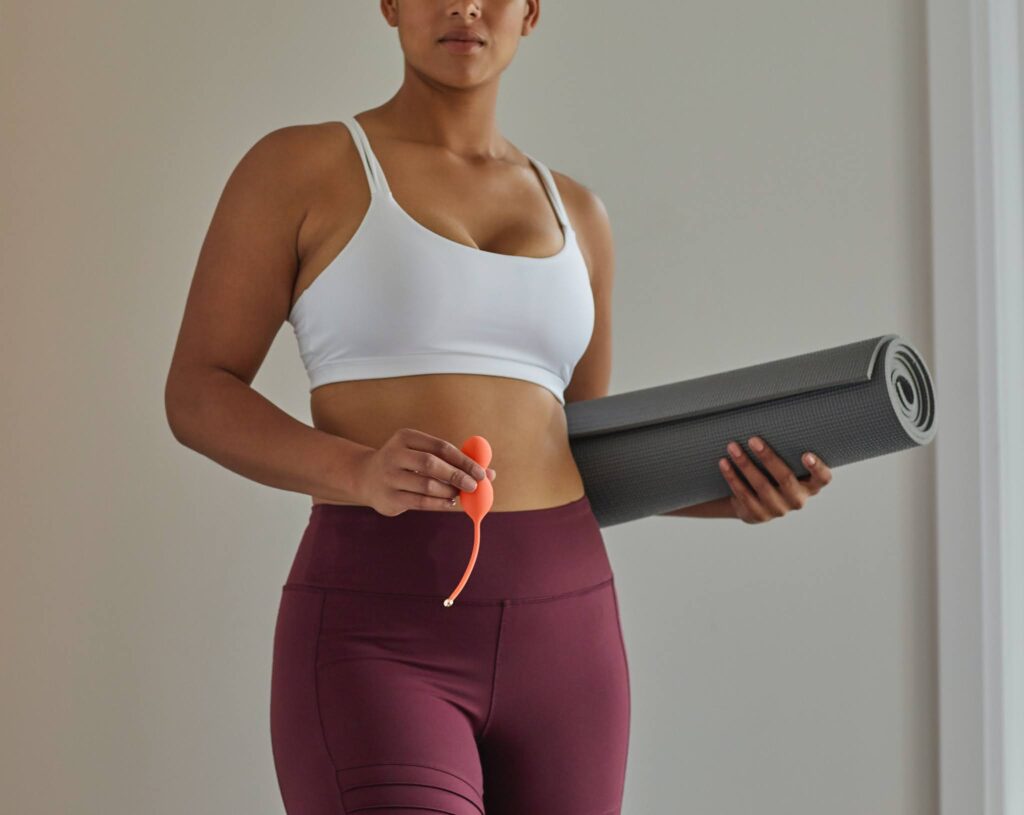
After giving birth many women struggle with suddenly having to urinate, not being able to hold the urine until being on the toilet and losing urine while sneezing or coughing, and other ways of urine leakage. This condition called urinary incontinence is very common after child birth and during the third trimester of pregnancy. In this article I will share about how and why this change in the inability of holding our urine happens and how we can support our body to get back to normal passing of urine. Pelvic floor muscles The pelvic floor muscles sit at the bottom of our abdomen. These muscles hold the weight of all our organs like bladder, uterus, rectum and intestines. During pregnancy they also carry the weight of the baby. The pelvic floor muscles sit between a diamond shape of bones made up of our pubic bone in the front, our tailbone (coccyx) at our back (end of our spine), and our sit bone (ischial tuberosity) on either side. Within this diamond shape of bones are layers of muscles that make out the pelvic floor muscles. They have a hammock-like shape and surround the anus, vagina and urethra.  The function of the pelvic floor muscles is to: Support and stabilise the pelvic organs (bladder, uterus and rectum) Control the opening and closing of bladder and rectum Contribute to sexual arousal and sensation through voluntary contractions Support the baby during pregnancy and help the baby navigate through the pelvis during birth Image source: https://www.continence.org.au/who-it-affects/women/female-pelvic-floor-muscles Changes during pregnancy and birth During pregnancy the weight the muscles have to carry is increased, since the weight of the baby and the surrounding tissues like the uterus, placenta, amniotic fluid etc. increases until birth. Due to the increase of weight the pelvic floor muscles get weakened and stretched. During birth the muscles have to stretch even more to create space for the baby to pass.  This additional weight and strain on the muscles can lead to a condition called incontinence. Pregnant women and new moms most commonly experience a type of incontinence called stress incontinence. In stress incontinence the bladder sphincter (the muscle that closes the urethra) doesn’t function well due to an increased pressure on the bladder and this causes involuntary loss of urine.  Typically urine loss with this type of incontinence happens when extra pressure is put on the bladder, like during coughing, sneezing, laughing, running and jumping. 34% of new moms suffer from stress incontinence compared to 1% of women who’ve never been pregnant.  The risk of incontinence after birth also increases with Vaginal delivery  Forceps or vacuum assisted delivery Episiotomy, a cut of the muscle between anus and vagina, or a muscle tear during delivery  Age – above 35 the risk increases Overweight or retained pregnancy weight after birth  Smoking  Women who still experience incontinence 12 weeks after birth have a high chance of having incontinence still 5 years later. However some studies suggest that more than 70% of women with incontinence are able to get rid of incontinence with supervised pelvic floor exercises and almost all of them felt an improvement in their condition with focused exercises. Exercises for pelvic floor muscles There are different things we can do to train our pelvic floor muscles. The most commonly known one is called Kegel-exercise. This is an exercise that involves tightening and releasing of the pelvic floor muscles.  Another option to train these muscles is to use external tools, like vaginal cones and Kegel-balls that are inserted into the vagina and then used to contract and release the surrounding muscles. However right after birth these tools are not recommended since the whole area around the pelvis is still sore. In case the nerves of these muscles have been damaged during delivery, there is an option of doing electrical stimulation. This is a passive tool that stimulates the muscles to contract and can help regrow nerve cells in this area.  Here are some exercises you can do if you are suffering from incontinence. Kegel exercises These exercises are a Kegel-exercise in combination with a regular breathing cycle, so the body gets trained more and more to get back to regularly contracting the pelvic floor muscles after birth.   You can do this exercise any time of the day. In the beginning it might be easier to lie down while doing this exercise. Later on you can do it also in a sitting or standing position. You can also include this exercise into your other exercise routines.    1. Basic exercise Lie down on your back with your knees bent and your feet touching the ground. Breath in deeply through your nose so your ribs expand. Try and breath only into the area below your breasts. Try not to breath into the belly or too far up into the shoulders (position 1).  As you exhale, pull your perineum (the muscle between your vagina and anus) inwards towards your belly and pull your navel and lower belly inwards towards your spine (position 2).  During the next inhalation relax your perineum and abdominal muscles. Repeat this exercise 10 times. Basic Kegel exercise – Position 1 Basic Kegel exercise – Position 2 2. Marching Exercise Lie down on your back with your knees bent and your toes touching the ground and heels raised. Breath in deeply through your nose so your ribs expand. Try and breath only into the area below your breasts. Try not to breath into the belly or too far up into the shoulders (position 1). As you exhale, pull your perineum (the muscle between your vagina and anus) inwards towards your belly and pull your navel and lower belly inwards towards your spine. Lift one leg slightly up as if you are marching (position 2). During the next inhalation (step 2) relax your perineum, abdominal muscles and lower your leg. During the next exhalation (step 3) lift your other leg.  Continue relaxing everything while inhaling and contracting while exhaling, switching legs each round. Repeat this exercise 10 times. Marching Kegel exercise – position 1 Marching

Exercises for Urinary Incontinence after birth |Kegel Exercises] Read More »

Health benefits of strength training

When we want to carry our grocery bags home, we need strength in our muscles to do so. When we carry our backpacks during our vacation, we need muscle strength to lift and carry them. When we climb steps we need our legs to have muscle strength to move. Any activity we do in our daily lives needs muscle strength. We might not be able to do many activities if we don’t have enough strength in our muscles. But we can increase our muscle strength by doing exercises which increase the cross sectional area of the muscle fibres. This increase in the size of the muscle fibre increases the muscle strength. This type of exercise is called strength training. In this blogpost I will share what strength training is, how we can increase our muscle strength, and what health benefits it has for our body apart from building muscle strength. What is strength training? Strength training is a type of exercise where we workout our muscles against an opposing force (like weights or our own body weight) to increase our muscle strength, anaerobic endurance, and skeletal muscle mass. Strength in our muscles can be increased with one of the following four objectives:  To increase the maximum strength a muscle has (maximal strength).  To increase the endurance of the muscles (strength endurance).  To increase the speed of our muscle response (explosive strength).  To increase the speed and strength at which a muscle can release the contraction (reactive strength). Most people who workout their muscles typically focus on increasing their maximal strength. The other three types of training are typically done by people who have very specific training goals, or those who have goals related to competitive sports.  How to increase our muscle strength? The strength of a muscle depends on the number of muscle fibres and the size of an individual muscle fibre. The number of muscle fibres is typically fixed in every individual at birth. But the size of each muscle fibre can be increased by doing exercises. After each exercise, the muscle fibres have micro tears, and during rest after the exercise, they rebuild. Supported with appropriate nutrition, the muscle fibres, while rebuilding, increase their cross section (hypertrophy) that results in increased muscle strength.  The exercises to build muscle strength can be done using –  our own body weight free weights (like dumbbells, barbells, kettlebells etc) or weight machines Depending on the focus of the workout (training specific muscle groups, individual muscles, or focusing on muscle movements), the level of our fitness, and our affordability, we can choose the type of exercises that makes sense to us. Effects of strength training on the body In addition to increasing our muscle strength, regular strength training has several health benefits for our body. Heart Reduces our pulse at rest. Strengthens our heart muscle. Reduces risk of heart disease. Blood and circulatory system Improves blood circulation by strengthening the heart and blood vessels. Normalises the blood pressure. Stabilises our blood sugar levels.  Reduces fat levels in the blood. Muscles Works against the natural loss of muscle mass due to ageing (after 30 years each decade we loose 8% of muscle mass if we don’t exercise).  Increases muscle flexibility. Increases Glykogen, Kreatine and ATP storages (fast energy) in the muscles. Generates more stimulants (enzymes) for ATP production. Bones Makes our bones stronger. Increases mobility in joints. Reduces risk of osteoporoses. Reduces risk of falls and fractures. Body weight Contributes to weight loss (provided the food intake is carefully monitored). Reduces fat content in the body. Increases metabolism. Reduces risk of type 2 diabetes. Hormones Increases Testosterone and growth hormones in the blood, which helps with repair and building of body tissue including the muscle tissue. Psychological effects Reduces anxiety. Increases self-esteem. Releases endorphins, which elevate our mood. Brain Increases blood flow to the brain. Can rebuild nerves in the brain (strength training with highly coordinative exercises). Helps protect from brain degeneration. Can increase cognitive performance/memory. With regular strength training we can increase our muscle strength, overall health and reach our physical fitness goals. Stay healthy and enjoy finding joy in health!

Health benefits of strength training Read More »

How do you begin running

Running has become quite popular over the last few decades, since it’s an exercise that you can do in any terrain with very little to no equipment. Running has a lot of health benefits including exercising your heart and lungs, blood circulation, fat burning etc. If you’ve always wanted to give running a try, but didn’t know how to get started, here are a few guidelines for you. What is running? To understand the basic difference between running and walking – running is a way of moving our bodies forward where both our feet are in the air between the steps. It is generally faster than walking, but it depends on your running speed. Depending on the speed of your run, you can be jogging (slow run), running, or sprinting (fast run). Preparation for running If you are new to running, there are a few things you can do to prepare your body for this new movement. Start walking for 15-20 minutes at a comfortable speed two or three times a week with at least a day of break in between.  During the first few times your breathing might feel a bit heavy. If it feels comfortable you can continue walking, but if it gets strenuous slow down your speed so you can breath comfortably.  Continue this preparatory walk for at least 2 weeks or until you are breathing comfortably throughout the 15-20 minutes. Next try to practice interval walking. First walk at a comfortable speed for 5 minutes, then walk briskly (at a speed where your heart rate is fast and your breathing is heavy, but you are not catching your breath) for another 5 minutes, and then slow down and walk at a comfortable speed for another 5-10 minutes.  Continue this interval walking for at least another 2 weeks or until you are able to breath comfortably during your brisk walks. As a next step try to increase the duration of the brisk walk. For example try 5 slow, 10 brisk and 5 slow. Then 2 slow, 15 fast and 3 slow.  Continue trying out these combinations with the goal to increase your brisk walk to 20 minutes with a minute of slow walk before and after. Once you followed these steps you are ready to start running. Start running As you are now prepared to move from walking to running, here are the steps you can follow to begin running: Step 1: Prepare your body for running Warm up your body by walking at a comfortable pace for 5 minutes.  Towards the end of the 5 minute warm-up, start running at a comfortable pace for 30 seconds. As you start running you might breath heavily and your heart rate will go up. You might also start catching your breath. After the 30 second run, slow down and continue walking at a slow pace for 2 minutes. Your breathing should stabilize by the end of this walk. After the 2 minute slow walk, run again for 30 seconds. Continue two more cycles. 2 minute slow walk – 30 seconds run – 2 minute slow walk – 30 seconds run. After the last 30 seconds run, walk slowly for 5 more minutes so your body can cool down. Continue this routine for two weeks or until you can breathe comfortably while running. Run three times a week with at least a day of break.   In summary: 5 minutes warm-up walk 30 seconds run – 2 minutes walk 30 seconds run – 2 minutes walk 30 seconds run – 2 minutes walk 30 seconds run 5 minutes cool down walk Step 2: Increase the running duration Once you can breathe comfortably during your 30 second runs, you can start increasing the run duration. Try increasing the 30 second run to 45 seconds. When you feel comfortable, increase the run duration to 1 minute, 1.5 minutes, then to 2 minutes. Make sure you are taking 2 minute walking breaks in between the runs.  Start with 5 minutes warm-up walk 45 seconds run – 2 minutes walk 45 seconds run – 2 minutes walk 45 seconds run – 2 minutes walk 45 seconds run 5 minutes cool down walk Increase run duration from 45 second -> 1 minute  -> 1.5 minute -> 2 minutes End with 5 minute warm-up walk 2 minutes run – 2 minutes walk 2 minutes run – 2 minutes walk 2 minutes run – 2 minutes walk 2 minutes run 5 minutes cool down walk Once your breathing is stable during the 2 minute runs, you are ready to run for longer periods of time.   Step 3: Start running Once you are able to run continuously for two minutes at least 4 times in a single session, you can start transitioning to full running.   Begin with a two minute walking warm-up, then run at a comfortable pace for 5 minutes, and then cool down with a 5 minute walk. Do this at least for a week, if possible 3 times with a day of break in between. Once you feel comfortable with this, you can start increasing the running duration to 10 minutes.  From this point on you are ready to run or prepare for long runs!  Depending on your running goals, whether you want to prepare for a 5K, 10K, half marathon or a full marathon, you need to have a training plan to reach your goals.  But, if you are running for the joy of it, you are now ready! The biggest hinderance for many people to continue running after they start running for the first time is not being clear on how the body responds to these new movements and what to do about it. I’ll share more about this in my next blogpost. Stay healthy and enjoy finding joy in health!

How do you begin running Read More »

Basics of stretching

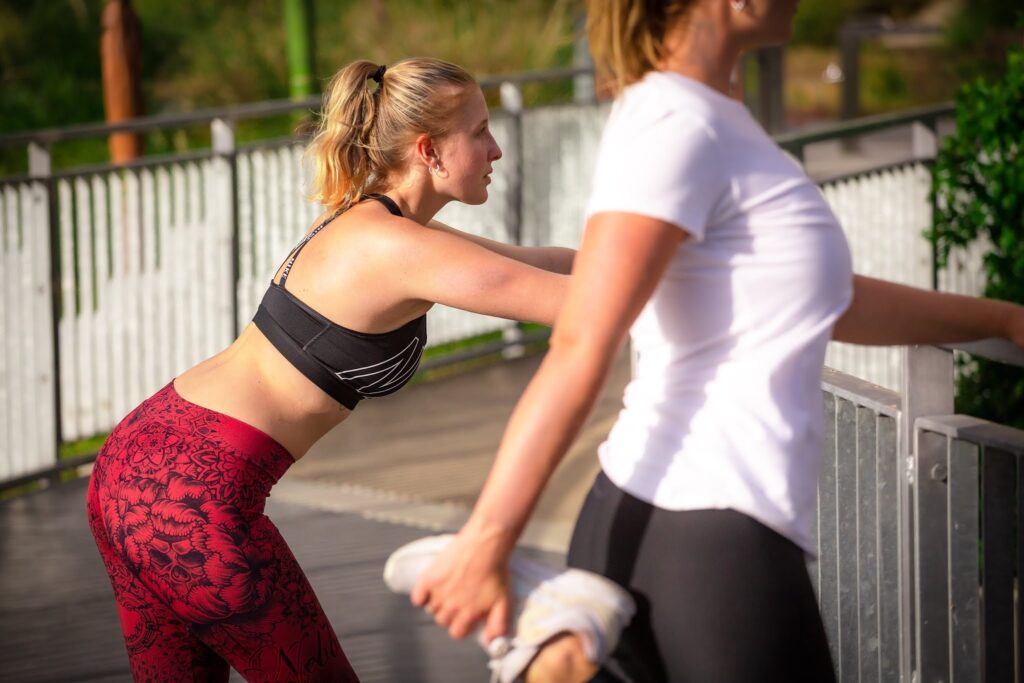
When we wake up in the morning one of our first natural responses is to stretch our arms, legs and our body to get ready for the day. It is something we don’t normally consciously think about, but it’s an automatic response of our body. But why do we do that? What is the purpose behind this natural and automatic movement? By dictionary (Merriam Webster) definition stretching means ‘to extend in length’. When we wake up in the morning our bodies tend to feel tight, because we have not used our muscles for a longer period of time during sleep. And when muscles are not used they automatically shorten. So by stretching our bodies in the morning we are extending them again, so they are ready for use.  So why do people choose to make it a practice to stretch regularly? And why do we need to stretch our body in addition to automatic stretching movements first thing in the morning?  In this article I try to give some insights into the positive effects stretching has on our bodies and how it might influence our body & mind. There are different ways one can stretch their muscles and I will share more about that later on in this article, but first I want to share about what happens in our body when we stretch. The University of Southern California did some research about this and here are some of their findings. Effects of stretching in the body The water content in our tissues increases, which means our body is more lubricated and can run smoother, The stem cells in the tendons (the strings connecting your muscle to your bone) multiply and create new or more material for the tendons, which lets them renew themselves and stay agile, The length of the muscle fibre is increased. Muscles are made up of muscle fibres which are made up of  sarkomeres. Sarkomeres contract and expand when we use our muscles. When we stretch, the length of the muscle fibre is increased by adding new sarkomeres.  So stretching helps the joints and muscles stay healthy by lubricating them, adding new material to the tendons and increases the amount of working units in our muscles.  But there is also a psychological aspect to streching. When we are stretching, our body produces serotonin, which is also called the happy hormone. It creates a feeling of happiness and reduces the stress in our body and mind. This is the body’s way of telling itself that what you are doing is healthy and you should do more of it. So even when we are done with our stretching routine we might still feel elevated and relaxed at the same time.  how to stretch When it comes to stretching, there are different ways to do it. They are generally divided into –  Active/Passive stretching  – Active means that you are doing it by yourself. And passive means you are doing it with an aid (like a wall, stretch band etc.) or the help of another person.  Static/Dynamic stretching  – Static is when you are stretching by holding a position for an extended period of time. Dynamic stretching is when you are stretching by using dynamic movements.  Stretching is a topic with lots of ongoing researches and discussions about many topics including what type of stretching makes sense, and for what type of activity. For example there are some stretches more suitable before we start an exercise and some after exercise. The type of stretches also depend on what exercise or sport we are about to do. In a general sense though, if we are trying to increase our flexibility and do something to increase the health and mobility of our body there might be specific stretches more suitable for us.  In 2018 a meta-study, published in the International Journal for Sports medicine, by Ewan et al., analysed 23 studies on the different types of stretching and what influence they have on increasing the range of motion (ROM). ROM is a term that describes how flexible one muscle is and how far it can extend. They found that static stretching for 30-60 seconds for at least 5 days a week/preferably 6 days a week for 5 minutes shows the biggest improvement in the ROM.  So that means, by spending 5 minutes a day our muscles and tissues would get more flexible, smoother in their movement and have more strength with the additional benefit of feeling happy afterwards. If you are curious to give stretching a try – in my next blogpost I’ll share a 5 minute stretching routine that can help you increase the flexibility of your body, with specific focus on the muscles that tend to shorten easily.

Basics of stretching Read More »